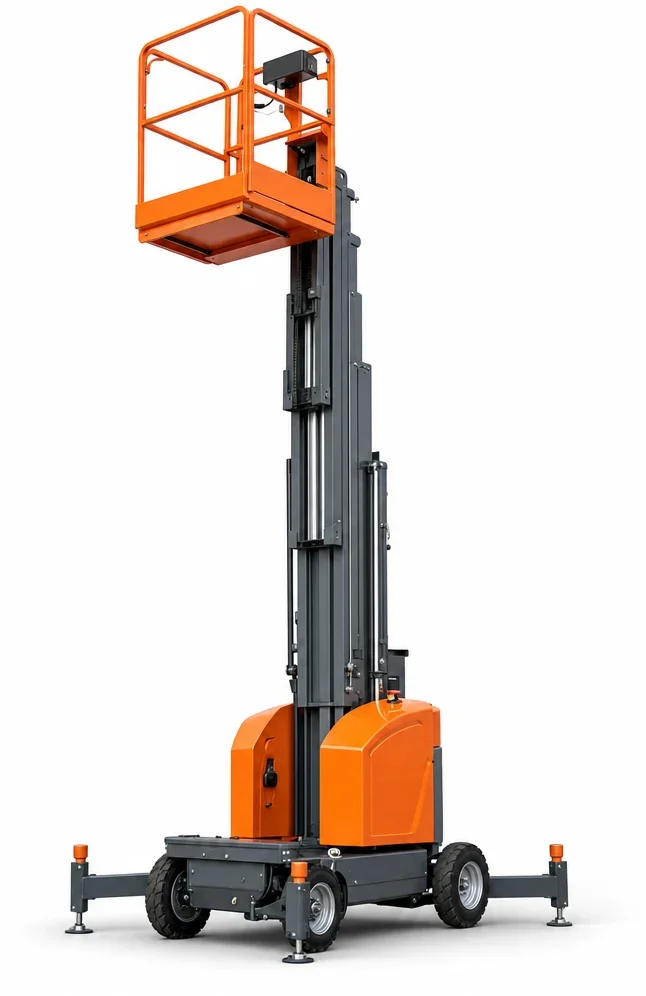
Where vertical masts make sense
These compact lifts fit through standard doors and navigate sensitive floors with modest point loading. They work well for lighting, sensors, and low‑to‑mid ceiling work in corridors or crowded rooms where larger chassis would interfere with equipment or traffic.
Choose based on: - Maximum platform height vs. target height with working allowance. - Door, elevator, and aisle clearances along the entire route. - Floor load limits near raised access floors or mezzanines.
Richmond‑specific considerations
Humidity and frequent summer downpours push more tasks indoors during wet stretches. In data and manufacturing spaces, emissions and noise are concerns, so electric power is standard. Where the task extends to larger, open high‑bay areas, an /electric-scissor-lift-rental/ may cover multiple points faster. If the route includes uneven exterior segments, a /rough-terrain-scissor-lift-rental/ or a compact /articulating-boom-lift-rental/ may be necessary instead.
Clearance, reach, and staging
Vertical masts are about precise, close‑range placement: - Verify side reach needs; these platforms are primarily vertical with limited outreach. - Confirm turning space at the work spot; nearby racks, valves, and cabinets can restrict basket rotation. - Check transfer points: thresholds, ramps, and elevator cabs.
Actual conditions, the selected unit’s instructions, and site procedures govern interior elevated work.
Related categories
- /electric-scissor-lift-rental/
- /articulating-boom-lift-rental/
- /rough-terrain-scissor-lift-rental/
- /aerial-lift-rental/