Establish the control geometry
Decide what the fence or barricade needs to separate: pedestrian routes from lift aisles, high-bay overhead work from ground traffic, or public sidewalks from deliveries. The tighter the turn or the narrower the lane, the more important panel length, base style, and visibility become.
Key layout factors: - Can the control line sit outside lift turning paths? - Are there overhead tasks where debris exclusion is needed near high-bay racking or MEP drops? - Will trucks or telehandlers need periodic openings without removing long runs?
Surfaces and weather in Richmond
On interior slabs, bases sit flat but can slick with dust or moisture. In yards, compacted soil may pump or settle after downpours, loosening panel alignment and creating toe-trip gaps. On sloped ground, wind loads shift and make long, straight runs less stable. Shorter segments with directional changes can reduce side loading.
Choosing fence and barricade types
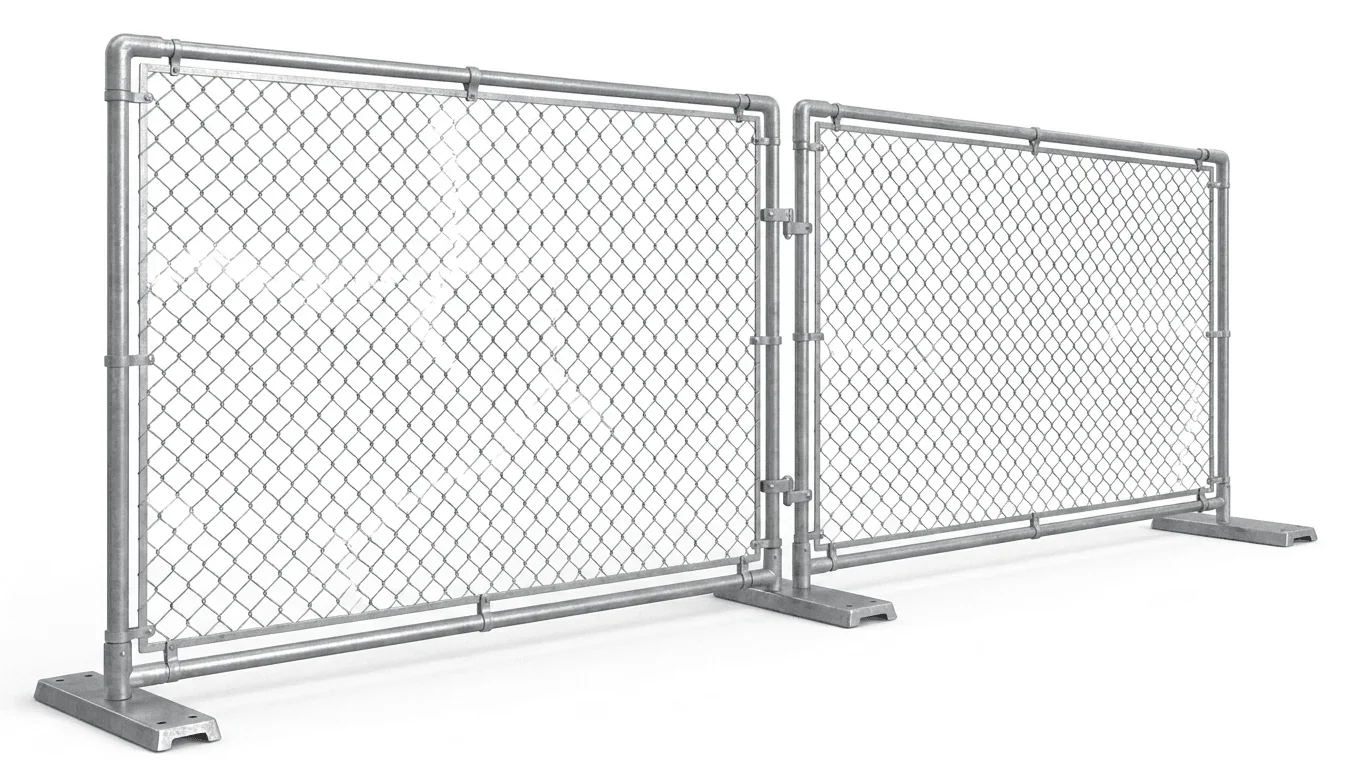
- Panel fencing for perimeter control where clear sightlines and modular openings are needed.
- Water-filled or weighted barricades for channelizing traffic near dock aprons.
- Low-profile pedestrian barriers for interior routes around scissor and boom work.
Coordination with aerial and material handling work
Where overhead tasks use lifts, keep exclusion zones legible without pinching lift approach. For interior ceilings on slab, see /electric-scissor-lift-rental/. For exterior staging or uneven approaches, see /rough-terrain-scissor-lift-rental/ and /boom-lift-rental/. Material drops with /telehandler-rental/ need straight, protected corridors that allow quick set-down and retreat.
Actual conditions, equipment instructions, and site procedures govern setup and use.
Industrial scheduling pressure
Richmond’s active buildouts push night and weekend shifts. Reflectivity, lighting, and color contrast on barricades matter when visibility drops and rain introduces glare. Plan for reroutes that keep emergency access clear during off-hours.