Start with task geometry
- Work height and position: straight-up access under ceilings favors scissor platforms; reach over equipment or conveyors pushes toward booms.
- Can the machine sit below the task? If yes, a scissor or vertical mast may work. If obstructions require outreach, look at articulating or telescopic booms.
- Load on the platform: tools and materials for MEP or racking installs narrow platform size and lift type.
Surface and route in Richmond conditions
Indoors, polished slabs and narrow aisles around high-bay racking favor compact, electric machines with non-marking tires. Outside, frequent downpours and mixed soils create soft spots and uneven grades, pushing toward rough-terrain units and wider turning space. Measure gate widths, slopes, and transitions from street to pad; the Fall Line terrain can stack short, steep approaches into otherwise flat sites.
Core lift categories
- Electric scissor: straight vertical work on slab with tight aisles. See /electric-scissor-lift-rental/.
- Rough-terrain scissor: exterior or unfinished floors with wider decks. See /rough-terrain-scissor-lift-rental/.
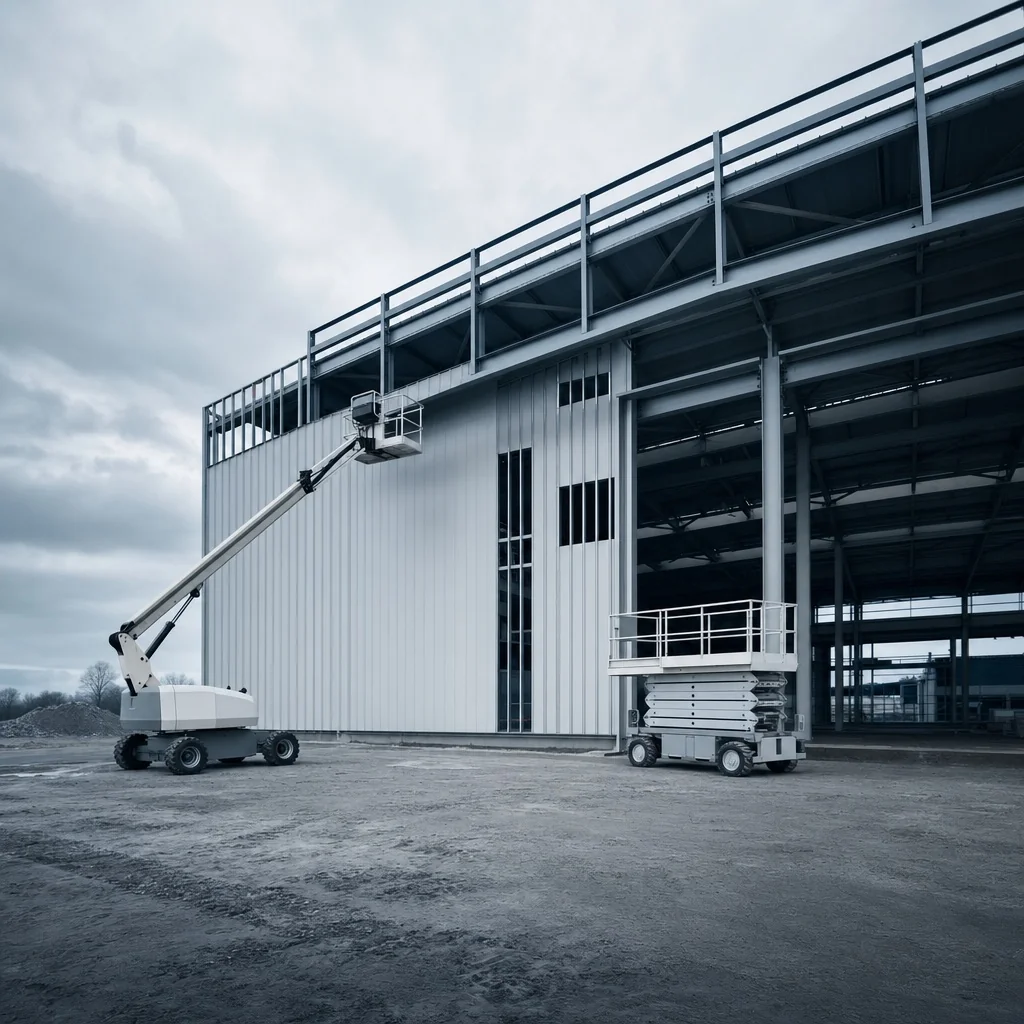
- Articulating boom: up-and-over access around duct, racks, or process equipment. See /articulating-boom-lift-rental/.
- Telescopic boom: long outreach where a clear line is available. See /telescopic-boom-lift-rental/ and /boom-lift-rental/.
- Vertical mast: very tight, lightweight indoor tasks. See /vertical-mast-lift-rental/.
- Material handling: forks for pallets on slab or variable reach for set-down at height. See /forklift-rental/ and /telehandler-rental/.
Site products that support tempo
- Generators and light towers keep commissioning and night work on schedule when power is not yet stable. See /generators-light-towers-rental/.
- Storage containers protect tools and materials near the work while keeping aisles open. See /storage-containers-rental/.
- Temporary fencing and barricades organize pedestrian routes and equipment aisles during phased buildouts. See /temporary-fencing-barricades-rental/.
Local industrial context
Richmond’s expanding industrial and advanced manufacturing footprint means high-bay interiors, data-heavy rooms, and sensitive process areas are common. That mix changes ventilation needs, turning space, and how lifts share routes with materials and temporary utilities. Align equipment choice with the specific bay height, obstructions, and outdoor staging surface.
Actual conditions, the selected unit’s instructions, and site procedures govern all elevated or exterior work.